Exploring physics beyond what can be counted by hand
We are the Computational Physics group at the University of Oslo. By applying high-performance computing, we simulate physical systems on all scales — from neutron stars to the flow of liquids in porous media — to predict interesting things about the world we live in.
Explore our research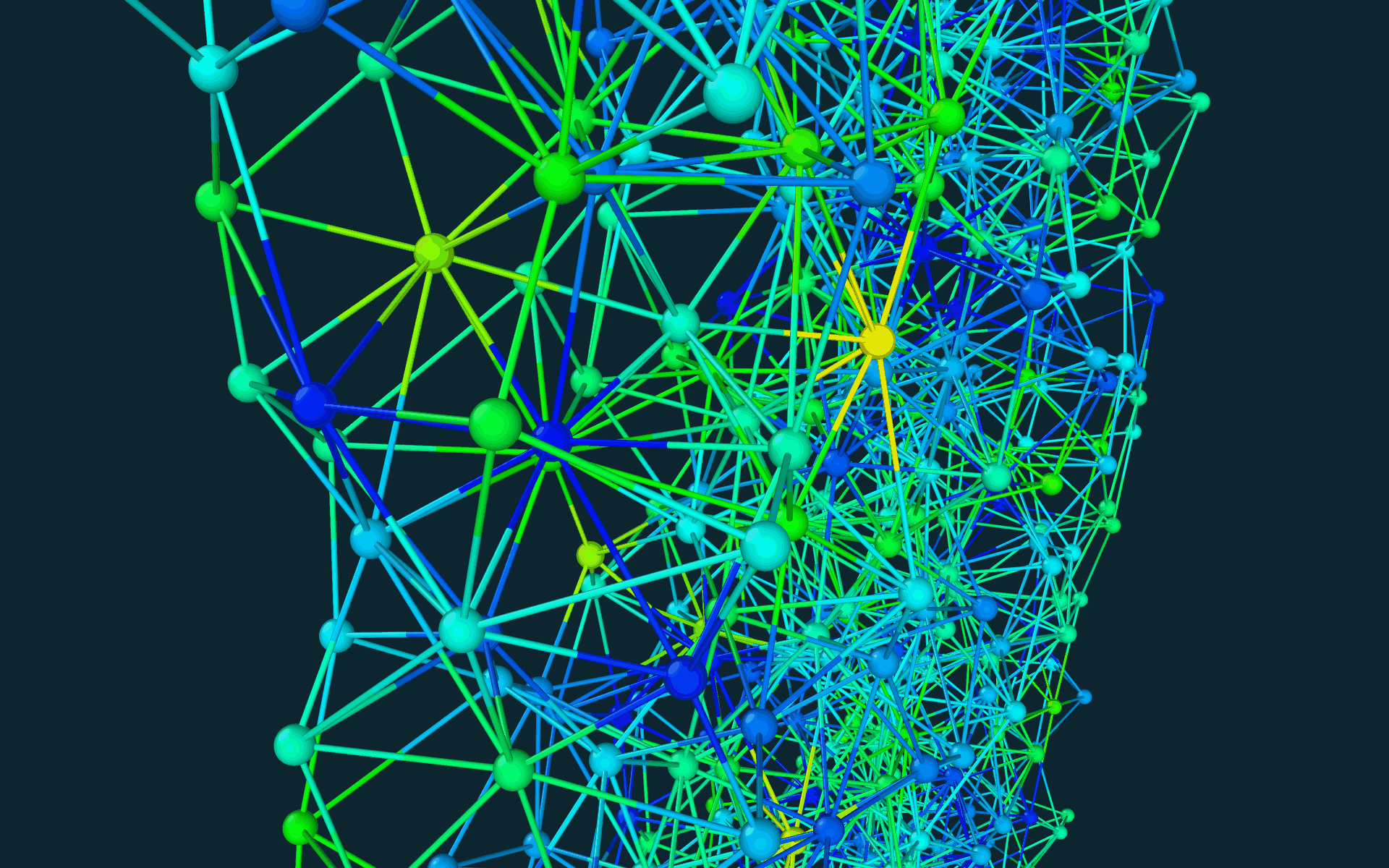

About our group
Our main focus is the development of theoretical and computational methods for quantum mechanical and statistical mechanics systems. We believe in solving problems in physics through the use of massive computational power, and we work actively to integrate computational methods into undergraduate science education.
The group is affiliated with the University of Oslo and collaborates with research centres including NILU and NERSC. Our research spans diverse topics — from tight rocks and shale oil to theoretical neurophysics and polymer models.
Computational physics opens a window into phenomena that lie far beyond the reach of pen-and-paper calculations. By harnessing the power of modern supercomputers, researchers can model systems of staggering complexity, from the dense interior of neutron stars to the slow percolation of fluids through porous geological formations. These simulations do more than simply confirm existing theories; they reveal unexpected behaviours, guide new experiments, and provide insight into regimes where direct observation is impossible. The discipline stands at the intersection of theoretical physics, applied mathematics, and computer science, transforming abstract equations into vivid, predictive pictures of the natural world.
The development of robust numerical methods lies at the heart of the field. Simulating quantum mechanical systems, for instance, demands algorithms that can handle exponentially growing complexity while preserving essential physical constraints. Researchers design and refine techniques such as Monte Carlo methods, molecular dynamics, and density functional theory to strike a balance between accuracy and computational feasibility. Each method carries its own strengths and limitations, and much of the work involves understanding which approach suits a given physical problem. This constant refinement of computational tools ensures that simulations remain reliable as they are pushed toward ever larger and more intricate systems.
Statistical mechanics provides a natural bridge between microscopic laws and macroscopic behaviour, and computational approaches have revolutionised its study. Rather than relying solely on analytical approximations, researchers can now simulate systems containing millions of interacting particles and watch emergent phenomena unfold in real time. Phase transitions, critical phenomena, and transport properties can be probed with remarkable precision. The ability to tweak parameters and observe the consequences allows for a deeper, more intuitive grasp of how collective behaviour arises from simple underlying rules, enriching both teaching and fundamental research.
High-performance computing is not merely a convenience; it is a necessity for tackling many of the most pressing questions in contemporary physics. Modern clusters and supercomputers distribute calculations across thousands of processing cores, making it possible to simulate physical processes that would otherwise require geological timescales to compute. Efficient use of these resources demands careful attention to parallel algorithms, memory management, and code optimisation. The group invests significant effort in developing software that scales gracefully, ensuring that computational power translates directly into scientific discovery rather than being squandered on inefficient routines.
Education and training form an integral part of the computational physics mission. Students entering the field must acquire a blend of skills that spans physics theory, numerical analysis, and practical programming. Courses and project work are designed to guide learners from their first lines of simulation code through to the design of sophisticated, large-scale computational experiments. Hands-on experience with real research problems fosters both technical competence and scientific curiosity. By mentoring the next generation of computational scientists, the group helps ensure that the powerful methodologies developed today will continue to evolve and find new applications in the decades to come.
The visualisation of simulation data transforms abstract numbers into accessible and often beautiful representations of physical reality. Whether rendering the magnetic field structure of a neutron star or mapping flow patterns through a porous medium, effective visualisation is crucial for both analysis and communication. Researchers use advanced tools to create images and animations that reveal hidden patterns, validate models against experimental observations, and convey complex ideas to broader audiences. A well-crafted visualisation can make the difference between a result that remains locked in a data file and one that inspires new questions and collaborations.
Collaboration across disciplines amplifies the reach of computational physics. Problems in geoscience, materials engineering, and astrophysics all benefit from the methods developed to simulate quantum and statistical systems. By working alongside experimentalists and theorists from neighbouring fields, computational physicists help interpret data, test hypotheses, and guide the design of future experiments. This cross-pollination enriches the research environment and ensures that computational tools are applied where they can have the greatest impact. The most exciting discoveries often emerge at the boundaries where different scientific traditions and perspectives meet.
The philosophy driving the group is one of openness and continuous improvement. Code is shared, methods are documented, and results are published in ways that invite scrutiny and reuse. An active coding style that prioritises clarity and maintainability allows new members to contribute quickly and ensures that projects outlive the individuals who started them. Regular seminars, workshops, and informal discussions create an environment where ideas circulate freely and unexpected connections surface. This commitment to transparency and community not only accelerates research progress but also makes the daily practice of science a genuinely collaborative and rewarding endeavour.
What we do
- Develop theoretical and computational methods for quantum mechanical systems
- Apply high-performance computing to simulate physical systems on all scales
- Study dense matter such as neutron stars and the flow of liquids in porous media
- Revitalize undergraduate science teaching through seamless integration of computational methods
- Maintain the Smaug computing cluster for large-scale physics simulations
- Collaborate with industry and research centres on projects spanning shale gas, nanoscale transport, and quantum dots
Programmes & resources
Courses
Our teaching integrates computational methods into the physics curriculum. Courses include computational neuroscience (FYS388) and biological physics (FYS381), designed to give students early contact with research and industrially relevant problems.
View coursesComputing Cluster
The Smaug high-performance computing cluster supports large-scale simulations across the group. Access procedures and coding standards are documented for all group members.
Cluster guideResearch highlights